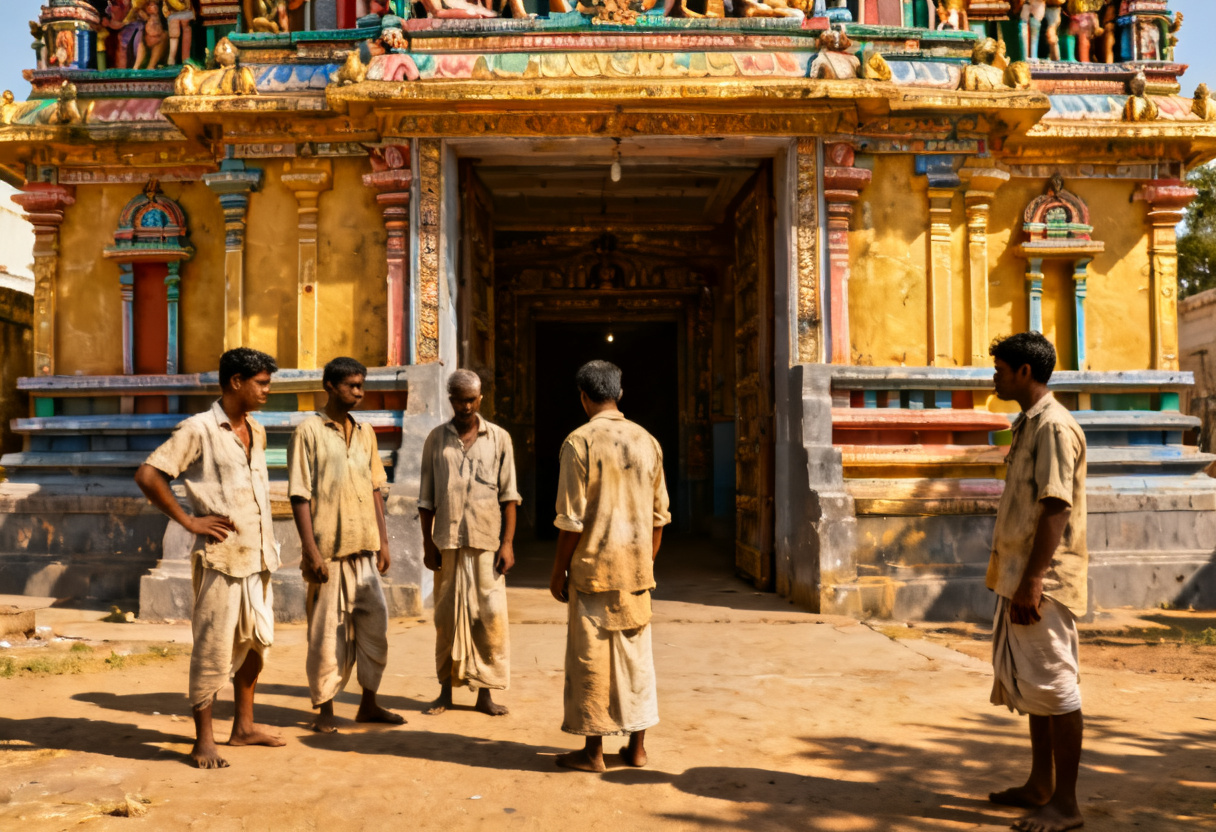
India's Constitution guarantees equality before the law, yet caste-based discrimination continues to be reported in some villages. Places of worship should unite people, but in certain instances they have instead become sites of social division.
Recent Examples
- Karur (2026): Members of a Scheduled Caste community alleged they were denied entry into a Mariamman temple during its annual festival, leading to protests and an official inquiry. Click here for source
- Madras High Court (2025): The court reaffirmed that no Hindu devotee can be denied entry into a public temple on the basis of caste and directed authorities to ensure equal access. Click here for source
- 2025 – Pudukottai (Vadakadu): Caste violence case hearing-la, affected Scheduled Caste community-ku Mariamman temple access ensure panna steps edukka vendum nu petition vandhadhu. High Court district officials-ai summon pannadhu. Click here for source
What Needs to Change?
- Strict enforcement of temple entry laws.
- Immediate legal action against proven caste-based discrimination.
- Awareness programmes in villages promoting equality.
- Equal participation for every community in temple festivals and public events.
- School-level education focusing on constitutional values and social harmony.
Conclusion
A temple belongs to every devotee, not to any single caste. Real progress is achieved when every person can enter a place of worship with dignity and without fear. Equality should be practiced not only in law, but also in everyday life.
By Prithiviraj S
District Reporter
IPU2606135343